29 September 2011

Franca Sozzani: Creative Mastermind


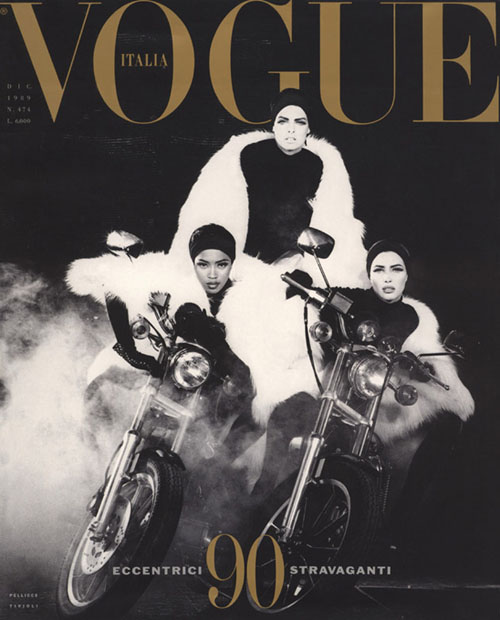
Franca Sozzani, has been editor-in-chief of Vogue Italia since 1988, shaping and changing the ideals and the rules of the fashion and publishing world.
            Since the beginning of her career, Franca has been at the forefront of Fashion, making iconic stride after stride. She began her career at Vogue Bambini and since then has directed legendary publications including LEI, PER LUI, and Vogue Italia. Franca is also the author of several books, including 30 Years of Italian Vogue (1994), the curator of numerous exhibits and retrospectives and has been awarded several prizes for her contributions to art and culture.
            Vogue Italia is recognized as the most arty and uncompromisingly, ‘Fashion,’ of the Vogues, and despite the fact that the editorial is in Italian, the magazine has become an international style bible. Franca has a genius for picking up on popular cultural trends and embracing these changes with ease, finding new and innovative ways to interact and connect with her audience. As the fashion publishing world evolves, so does the role of editors and Franca is leading the way in this unique and exciting development.
            I’m sharing with you an amazing interview by Christopher Michael from Models.com, that gives further insight into the creative mastermind that is Franca Sozzani.

ONE INTERVIEW // FRANCA SOZZANI
AN INTERVIEW BY ONE MGMT‘S CHRISTOPHER MICHAEL FOR MODELS.COM
Christopher Michael: You have been the editor-in-chief of Italian Vogue since 1988. What sort of demands do you find yourself facing today that you did not have to deal with then?

Franca Sozzani: The fashion system has completely changed, so what was twenty-two years ago has nothing to do with today. Then, Italian Vogue was called the first experimental magazine. We didn’t even have so much sex in the beginning, but people were so conservative then that we were always dubbed the “experimental” magazine, and for the first two years, we suffered for this. Italian Vogue is an Italian magazine; it’s written in Italian, a language that is only spoken in Italy, so my idea was that in order to become international, we had to develop a visual language. At the time, photographers were appreciated, but not perceived as the artists or image-makers that they are today. Today, all magazines are hyper-visual—you buy any magazine and it’s one image after another. But we were the first magazine to prioritize the images—and this was, of course, before digital photography! Back then, we were always working on the lighting, and sending prints back and forth by Federal Express. Now you put images up on an FTP, and the next day you are already able to do the layout. Before computers, we did our layouts with tape and scissors. That seems like it was 200 years ago, but the big change has really been in the last ten or twelve years.

CM: Speaking of the visual language, another interesting choice you’ve made is the unprecedented ongoing relationship between Vogue Italia and Steven Meisel. It has to be asked, what reason was behind your decision to use one photographer for all of your covers for so long?
FS: I needed to have a consistent, recognizable look to every cover. My idea was that even if you took the word “Italia” off, you know what Vogue Italia is. Many magazines don’t seem to have a connection between one cover and the next, and it becomes hard to tell them apart. Especially today—images can be printed in such a high quality, but that also flattens them out, in a way. There’s a similar problem in fashion. Everyone can buy clothes—the most accessible clothes are not of the best quality, but unless you look at the label, you don’t know who it’s by. It’s this kind of over-saturation that makes me believe we are on the brink of another huge change.
CM: Italian Vogue, now more than ever, has really become a global brand. Do you believe that the time when markets were regional and separate is over? That we are becoming one global market?
FS: No. I believe that even today, there’s still an appreciation for the different system, or attitude, that each country has. What is surprising to me is how Vogue Italia is being appreciated in China, India, Korea, and Japan. This does not happen to every magazine. Sure, American Vogue has that, but they are an institution. Italy is not as powerful, but I think our international popularity goes back to your first question. The big difference between then and today is how much more conversant people are in visual language now. We can communicate because the language is no longer limited to words. It’s spoken in images.

CM: Due to economics, many publishers want their magazine editors to work within safer creative boundaries. Vogue Italia seems to have managed to continue allowing its photographers the same creative freedom. How have you managed to maintain that?

FS: Most of the photographers at Italian Vogue—Bruce Weber, Paolo Roversi, Peter Lindbergh—they started with me. We have a special relationship, because we all started together. Even with people like Tim Walker and Craig McDean— we’ve been working together for so long, and there is a trust that develops in that kind of working relationship. Condé Nast gives you freedom. If you don’t disappoint them while using that freedom, you are able to keep it, and I’ve been there for twenty-five years.

CM: You write on your own blog every day. What was the catalyst for starting it?
FS: When we started the website, I was sure that we could find a distinct language for the web, which was not the same as the magazine. What is the difference? In a monthly magazine, you have time to think about the images, to figure out how to make the layouts, and all of that. The web is exactly the opposite: it’s quick and it has to be out. I thought that if I were to do a blog, I would again take the responsibility for developing a voice, as I did with creating the visual language for the magazine. I thought I could make it about more than just fashion—it could be about television, news, scandal—but I would take responsibility for what I say on it. I don’t want to destroy the image of anyone, and I always try to stand by what I say. As a result of my work with fashion and photography, I have credibility with a certain audience, and I can use that to branch out into different subjects. It doesn’t mean that I don’t get attacked from time to time, but on a blog, you can have a dialogue with your critics. I think it’s very important to take responsibility for what you say. Whenever you do something publically, you will have critics— when I started at Vogue, people were always saying things. I like the opportunity to have dialogue, but first I have to expose myself and take the risk. It can be very tiring—I write six days a week. But the site has been successful, with over one million unique hits this month alone. It’s been great.
CM: Your approach to fashion goes beyond the clothes. It seems to be a very culturally aware, or even philosophical approach. Is this something you consciously cultivate? Or is that just the way you experience fashion?
FS: When we talk about fashion, we should have two different points of view. There are people who are very creative—they make fashion. And there are people who are really good with product—they make style. When someone is very creative, even if their work doesn’t sell, follow them. They are opening up a new way. When you are talking about style—or styling—it’s different. Anyone can do styling, and make a “correct” show. But a creative show relies on thousands of little ideas underneath the surface. It’s very important to see this difference. Because instead of focusing on one “fashion,” you focus instead on different women.You should not be provocative all the time, because if you are provocative all the time, people get tired of it. To be provocative every month means that you have to say the opposite of the issue from the month before. So you become unreliable. If you address the different kind of women that will always exist—the romantic, the chic, the perverse, the sexy—you encompass all of the fashion that you see. So I mix the two, the creatives and the people who are good with product, this brings something for each kind of woman; this is what I do.
CM: What is the selection process for you when it comes to introducing new photographers and stylists to the magazine?

FS: Instinct. I do, or I don’t. When we started the website, I almost did the whole thing with interns. There are so many young, talented people, who have a great energy, an interesting approach. They see things a different way. I meet people and if I like them, I hire them and it starts this way.

CM: When you were growing up and in school, is this what you always dreamed of doing?
FS: No. When I was in school I didn’t even think about working. I thought I would get married, have children. I was in university and really loved to study, I loved art and books. I was never a disco girl. I believe in fate, I guess—things just happen the way they are meant to.
CM: And your charity work with Child Priority?
FS: The charity and the young talent, these are two things that I spend a lot of time on. The young talent especially because I think that a new generation has to come; we can’t keep our seats forever. The more talented people there are around me, the less work there is for me to do because they are good. Young designers, young photographers, it’s good to have new blood, a new generation and they know that what I promise, I always maintain. I’m not interested in doing a contest where you win and you go home and make your mother’s day, but then nothing happens. I’m interested in a structure that provides young talent with opportunity so that they can do consulting and earn money. All of the people we’ve helped through the charity by providing job opportunities are still working in their fields six years later, and they made it through the economic crisis. You must be creative of course, but today you also need to have a sense of media, and be able to talk to people. You need to be able to make a business plan, and understand what is the focus of your line, of your work. It’s like having thousands of children and watching them grow up. It’s amazing, we put certain new designers who were selling in only a few cities on Yoox.com—and all of a sudden, they are able to reach shoppers in fifty different countries.
CM: I hate to ask such a banal question, but I feel I must—do you feel that the web threatens your print sales?
FS: Not at all. I believe the website is doing a great job because it functions as a teaser for the magazine. September, October, and November our sales were up twenty-seven percent, and this is because of the web. Everyone has this idea that online will kill print, but it’s not true. Like everything else, it depends on how you do things.

Fashion with a side of SOOT.


YEDP provides fresh faces in the fashion industry a networking opportunity that could potentially change their career. From the models, to the designers, the sponsors and the chic fashionistas that make up the guest list, the event attracts the who’s who from all areas of the industry, offering exclusive opportunities and lets be honest a fabulous excuse to dress up and sip some bubbly. A fashion show, in a library and a glamorous event channelling its inner Brazilian pool party, what’s not to love!
I caught up with Edwina Sinclair of SOOT. another one of the very talented designers involved in this amazing event.

Edwina Sinclair of Soot. dishes the dirt for Cadence and Clementine…

Favourite designer: It changes all the time, usually the designers I do like have a totally different aesthetic to me but I love their creativity. Some of my favourite designers include Karla Spetic and Yang Du. I love a lot of emerging designers as well as they usually bring something fresh.
Favourite food: Lollies!
Favourite colour: You wouldn’t guess it from my designs but yellow
Favourite material to work with: I have always loved using silk cotton in my designs
Favourite movie: The Lion king.
I wish I was…Able to tell what people were thinking.
If I was an animal I would be a…Squirrel
Fashion is…An expression of one’s self, it is fun and creative and sometimes shouldn’t be taken so seriously.
Biggest fashion mistake: I’m sure I have made plenty, but I don’t really think of them as a mistake but rather more of a learning curve. I am so lucky to be in this industry so young so I can start learning now.
The trend you never want to see in fashion again: There isn’t anything I wouldn’t like to see again to tell you the truth. I love seeing all the changes and what’s coming back into fashion.
I wish…High- waisted…would be around in fashion forever.
Three people I would invite you a dinner party would be…Andrej Pejic, (I just think it would be really interesting to meet him), Valerie Steele, (Who is just a bundle of knowledge), and Vivienne Westwood, (I think she would make things interesting!).
My icons are…My parents are so supportive, my mum helps me so much and my dad is such a hard worker.
On my iPod at the moment: Coldplay after seeing them at splendour.
Chicken or Fish: Neither I am vegetarian
Mac or PC: Mac.
Vodka or Wine: Red wine.
Blogs or magazines: Both.
Never leave the house without: My handbag which is made out of recycled bike tyres.
People don’t know that I…Design late at night.
The last time I laughed hysterically was when…My friend eating a slice of butter thinking it was cheese.
Tomato sauce belongs in the…Cupboard
In my fridge today, you would find…Fruit and veg, it defiantly needs some re-stocking!
The clothes in my wardrobe are organised by…The types of garment that are. The order goes, pants, shorts, jackets, short sleeve tops, dresses, long sleeved tops then skirts.
Would most like to work with…I would love to work with Karen Walker, I think her designs are right up my alley, feminine and fun.


C&C: How important is something like YEDP to you career?
ES: Very! Alot of people are viewing your clothes so you need to give a good impression. Everything needs to be at the highest possible standard.

C&C: What opportunities have presented themselves since the night?
ES: There has definitely been alot of interest in the collection I showed. People are wanting to get their hands on some of the garments they saw and there has been more exposure and more people knowing about my label.

C&C: When was the label founded?
ES: When I finished school at the end of 2009.

C&C: Where did the name come from?
ES: When I first started designing, I loved black, charcoal and ivory and really only designed using that palette. So that’s where the name came from, like soot in a chimney. I have grown as a designer and have started taking more risks with colours and prints.

C&C: Who else is involved in the brand?
ES: My family is really supportive, my mum helps me alot with the business side of things! I also have a girl who works at the store for me casually and she helps me alot with backstage jobs.

C&C: Are you selling in any major retailers yet?
ES: I wouldn’t say major, more boutique retailers, but I kind of like that though, it is a bit niche. I am stocking at my store, The Soot. Concept Store on
James Street
, Izabel + Sebastian in Southbank and Silver Thimble in Melbourne.

C&C: What is the overall look and feel of the label?
ES: It’s fun and feminine. When people wear my clothes I want them to feel edgy yet comfortable.

C&C: Where do you get your inspiration from?
ES: Everywhere and anywhere. It’s amazing how things can inspire you without you even really knowing. My latest collection came together after watching the cartoon show, ‘The Jetsons, (oversized collars, caps sleeves etc), but it also has a sixties take on it, with lots of full circle skirts.

C&C: How difficult has it been to create your label at such a young age?
ES: It’s very difficult and juggling it with life is sometimes hard, but if you’re passionate about it you will be committed to it. You just need to keep trying even if things don’t go the way you had hoped. You also need to live on minimal sleep!

C&C: What’s the best advice you have been given in regards to your career?
ES: The fashion industry is pretty tough but there are also alot of opportunities out there. You need to put yourself out there and even if you get knocked back a few times you need to keep trying. It’s all a learning experience.

C&C: What are youR future dreams and goals, where do you hope to take the label?
ES: I am hoping to take it everywhere. I don’t think the big push will come until I finish uni but I just need to keep furthering my skills and knowledge so that more and more places want to stock my label.

C&C: What’s next, what are your short term goals and how are you going to continue to develop and create?
ES: At the moment I am focusing on doing well at uni, I am learning a lot from it and applying it to SOOT. I am just taking it step by step with SOOT. I think it is going really well so I just have to keep pushing my name out there, and coming up with new and innovative designs that people want to wear!

28 September 2011

Round Two: With Carolyn Murphy


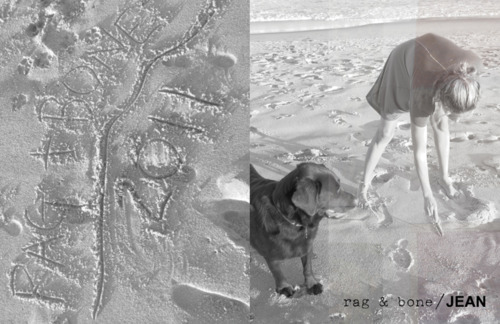
The next set of photos from the second round of the Rag + Bone DIY ad campaign have been released and feature the natural beauty and charm of supermodel, Carolyn Murphy. The images were taken between vacation in North Carolina and Montauk with her family and capture intimate moments on the beach, with what we can only assume is the family’s adorable dog.                                 
“My family has been visiting Nags Head since the 1950’s to escape their farm in VA and our fondest memories are eating crab legs and flying kites at Kitty Hawk. The newest tradition is Montauk with my daughter. She caught fireflies for the first time and surfed on her own.”
 – Carolyn Murphy, August 2011
The rawness of the photos and the picturesque natural lighting only further highlights Carolyn’s true beauty and free spirited aesthetic. 
“I am most inspired by going to basics in life and being with family and friends…Inspired by tradition and quality as opposed to quantity, my daughter was most inspiring as my muse for what the future needs…Nature and less is always more.”
-Carolyn Murphy, August 2011

27 September 2011

The Evolution of ZHOU


            The Young Emerging Designers Party is a dream come true for anyone hoping to get a foot in the very exclusive door of the fashion world, it’s a networking fantasy and an incredible contact building opportunity for individuals in all fields and areas of the industry. Don’t be fooled by the glamorous façade, nine inch heels and Belvedere’s most exclusive Vodka series, IX, being served at the bar, this event is just as much business as it is frivolity and fun, it’s just, ‘serious,’ done in an exaggerated, stylised, sensational way… this is, after all, fashion darling!
            I spoke with the ever-talented Madeleine Murdoch, designer of the fabulously eclectic label ZHOU, about being involved the amazing opportunity of YEDP and how it feels to be releasing her second collection at the tender age of 19!

Madeleine Murdoch lays it out for Cadence and Clementine
Style Inspiration: Margherita Missoni, Mary Kate and Ashley Olsen.
Favourite Designer: Mary Katrantzou at the moment, (it always changes).
Favourite food: Vietnamese/Japanese.
Favourite colour: Orange!
Favourite material to work with: Patterned!
Favourite movie: Too many to choose from.
I wish I was…Taller!
If I was an animal I would be…A deep sea urchin.
Fashion is…A form of expression.
Biggest fashion mistake…Skrillex haircut.
I never want to see…leg warmers in fashion again.
I wish…Kimonos would stay in style forever.
Three people I would invite to a dinner party are…Mick Jagger from the 60's, Alexander McQueen, and David Attenborough.
My icon is: There is no one person - I look up to and admire different parts of everyone I meet! I love finding things that I can learn from or take from people! For example my family, friends, incredible minds, fashion designers, artists! However, my Nanna is pretty damn cool.  
On my iPod at the moment: Watch the Throne, The Seeds, Mitzi and The Otchkies.
Chicken or Fish: Fish.
Mac or PC: Mac.
Vodka or Wine: Wine.
Blogs or magazines: Both!
Never leave the house without…Clothes on!
People don’t know that I am…Slightly mad.
The last time I laughed hysterically was when… I was watching my boyfriend playing tennis.
Tomato sauce belongs in the…Fridge!!!
In my fridge you, today you will find…Any weird natural organic food that I think looks funky and probably costs too much.
The clothes in my wardrobe are organised by…I don't know the meaning of the word.
Would most like to work with…The whole Missoni family!

C&C: How important is something like YEDP to you career?
MM: The event gave me the coverage and confidence to push my Spring/Summer range to a wider public which is so important when it comes to networking and marketing!

C&C: What opportunities have presented themselves since the night?
MM: I have had numerous magazines ask me to include my clothes in shoots, a new boutique to stock in, a greater awareness of my brand and traffic to my website!

C&C: When was the label founded?
MM: I started ZHOU in 2010.

C&C: Where did the name come from?
MM: When I was travelling throughout Vietnam I stayed very close to many of the northern hill-tribes in Sapa. I got the chance to meet some women pronounced, 'ZOW,' women from the Red Dao tribe, they wore extremely colourful headdresses and jewellery and I was really inspired by their overall aesthetic, hence why I decided to name my label ZHOU, (Pronounced, ‘HOW,’).

C&C: Who else is involved in the brand?
MM: My machinist! .......all interns welcome haha!

C&C: Are you selling in any major retailers yet?
MM: My clothes are currently or will be stocking in James Street Boutique, 'Soot,' and at, 'Izabel + Sebastian,' in Southbank.

C&C: What is the overall look and feel of the label?
MM: At the moment my designs are quite simple in structure, using bright, bold colour and some printed fabrics. However, I plan to travel to India within the next year to develop more into textile design using embroidery and printed fabrics! I want my label to represent feminine silhouettes with interesting and unique patterns that women feel beautiful, feminine and comfortable in on any occasion.

C&C: Where does your inspiration come from?
MM: Everywhere…Mainly, at the moment, old books, pressed flowers and birds.

C&C: How difficult has it been to create your label at such a young age?  
MM: Because I do most of the work by myself, it has been an extremely hard task but I'm constantly working towards creating something I will truly be satisfied and proud of, and when that happens I know it will all be worth it. At the moment, everything I do is a learning curve and pushing me to do bigger and better things!

C&C: What’s the best advice you have been given in regards to your career?
MM: Always remember you are showcasing a part of yourself and you can choose when you are ready for that to be exposed, so wait until your ready as there is no point in revealing something you are not truly proud of and represents uniquely yourself.

C&C: What are your future dreams and goals, where do you hope to take the label?
MM: I want to go overseas and be blown away with a million ideas, so I can come back and create my ultimate collection and push for Sydney Fashion Week and stockists nationally!

C&C: What’s next, what are your short term goals and how are you going to continue to develop and create?
MM: Finishing my diploma and TRAVEL! I want to spend alot of time pattern making and sampling to find the perfect silhouettes for all women's body shapes, so that I can create a line of clothing that will appeal to every woman!